
Two Wilmettes, two design problems
Indian Hill Estates was developed from 1926 on long winding roads, and its curvilinear plat produced irregular, larger, well-treed lots. Kenilworth Gardens filled in largely through the 1930s. The lakefront strip north of the village — the parcel locals still call No Man's Land — was heavily developed in the 1920s. All of it is pre-war fabric, including two Frank Lloyd Wright houses and other Prairie School work, and it takes a landscape with weight and permanence.
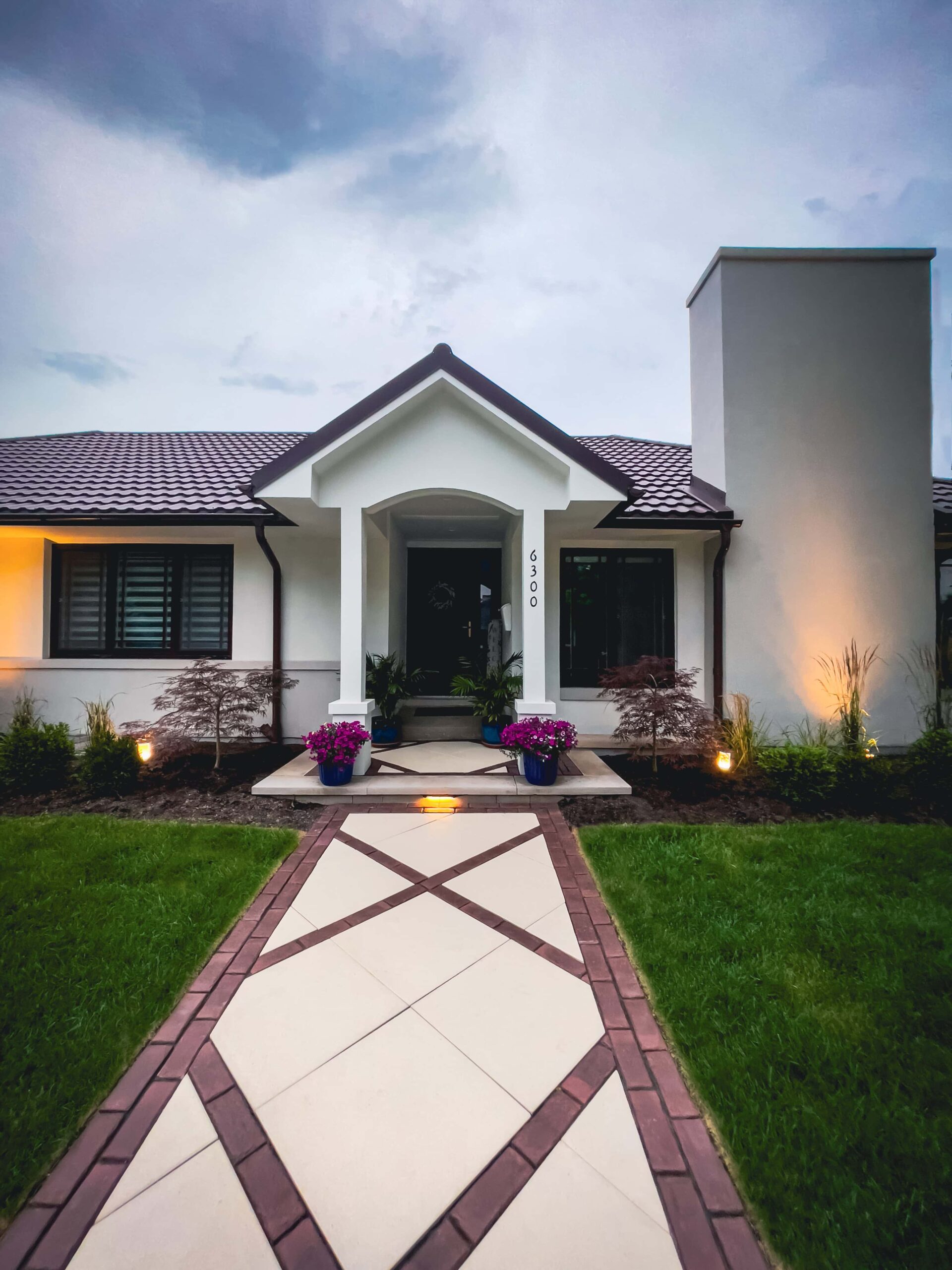
West of Ridge Road is a different village. After the war, builders sold ranch and bi-level models under names like Young Modern and Skylark, and the population went from 18,162 in 1950 to 28,268 in 1960. Those are conventional grid lots with smaller uniform dimensions and a horizontal architecture that wants low, long, horizontal landscape moves rather than vertical formality.