
Topo d'Oro Landscape Design
Winter Operations

Snow & Ice Management in Evanston & Chicago's North Shore

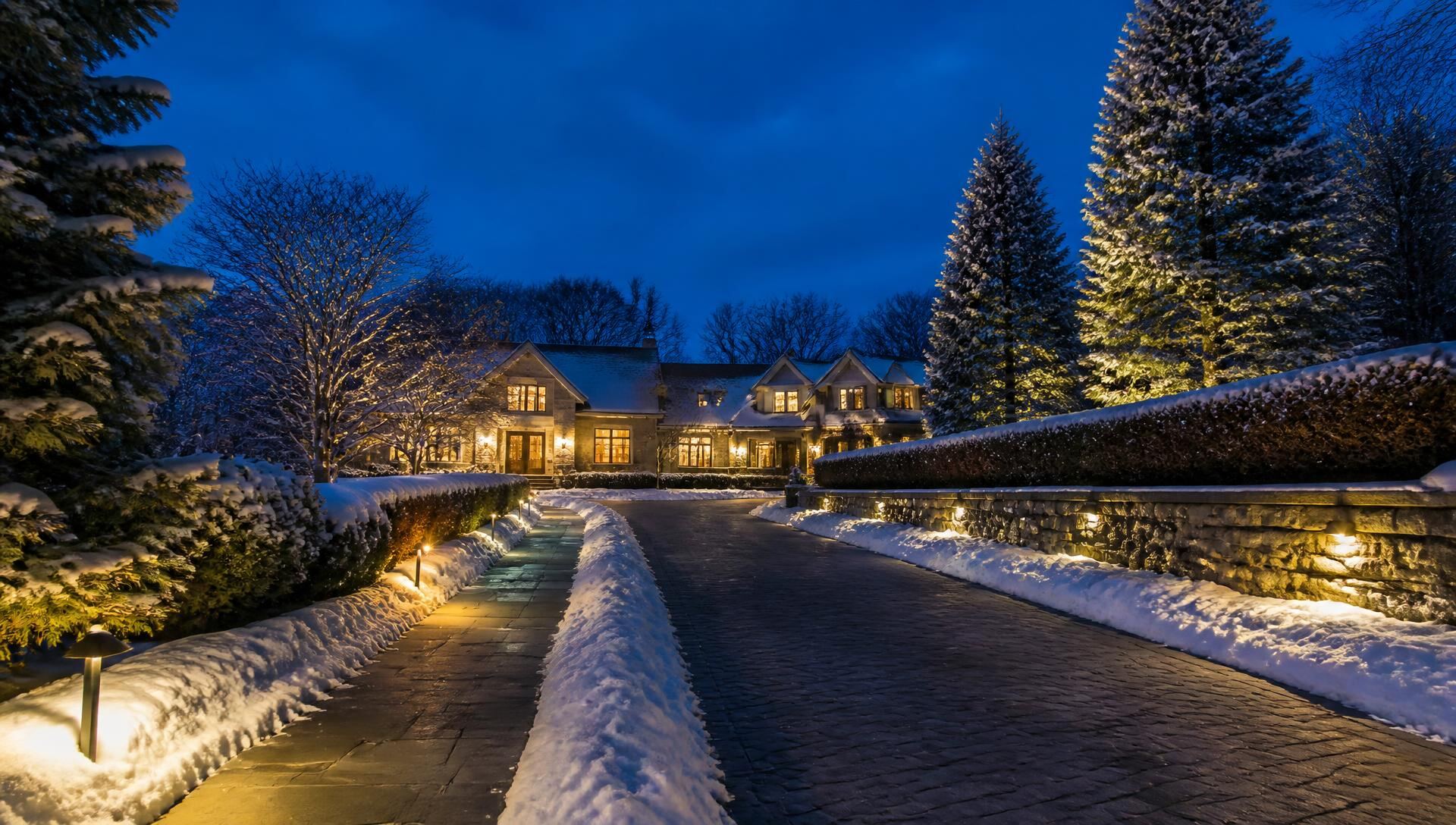
A cleared bluestone walkway and driveway after a winter snowfall, lit by low-voltage landscape lighting at dusk

Topo d'Oro provides snow plowing, sidewalk and entry clearing, and ice management on seasonal contract across Evanston and Chicago's North Shore. Winter contracts are written in September and October, before the first event, because route order is set in advance — a property added mid-storm is a property waiting in line. We manage residential drives and walks alongside commercial lots, entrances and accessible routes, and we document every event.

What's included

Snow & Ice Management scope of work

  • Plowing

    Drives, aprons, parking areas and turnarounds, cleared to the surfaces named in the scope.

  • Walks, steps and entries

    Hand and machine clearing of the paths the village does not touch, including the run from the drive to the door.

  • Accessible route clearing

    Entrances, ramps and the accessible path of travel kept clear and treated as a priority surface.

  • Ice management

    Pre-treatment ahead of an event and de-icing after, with product and rate chosen for the temperature and the surface.

  • Pre-season site walk

    Grades, drainage, obstacles and surface conditions recorded before the first event.

  • Staking and site mapping

    Bed edges, low walls, irrigation heads and lighting marked; piling locations set against drainage.

  • Snow relocation and hauling

    Stacking capacity planned in advance, and removal from site when a lot runs out of room.

  • Refreeze and drainage management

    Piles and meltwater routed away from entrances, walks and accessible routes.

  • Event documentation

    A record of each event — timing, surfaces serviced and material applied — kept for the season.

Commercial property is not covered by the Illinois Snow and Ice Removal Act

The Illinois Snow and Ice Removal Act, 745 ILCS 75, shields residential owners, occupants and the people they hire from liability for injuries caused by the snowy or icy condition of an abutting sidewalk — even where the removal was done badly. The only exception is conduct that rises to wilful or wanton. That is a high bar, and it makes residential clearing a low-risk act.

Commercial property gets none of that. The Act is written for residential units, and commercial owners are left with the ordinary Illinois rules: generally no duty to remove a natural accumulation, but real exposure for an unnatural one. An unnatural accumulation is very often something the removal itself created — a snow pile stacked uphill of an entrance that melts across the walk by afternoon and refreezes after dark, a downspout discharging onto a cleared path, a low spot in a lot that nobody graded out.

Which is why where the snow goes matters as much as whether it moved. We stake and map piling locations before the season against the site's grades and drainage, and we keep them off entrances, accessible routes and anything that drains toward one. This is general information about how the rules work, not legal advice — your counsel and your insurer should see your actual contract.

The two-inch trigger, and what the village is doing while you wait

Most North Shore villages run their own operation on a two-inch trigger, and yours has to work around it. Wilmette begins plowing streets, business and school routes, cul-de-sacs and alleys after two inches, and imposes a village-wide parking ban once accumulation reaches two inches, holding for 24 hours after the snow stops or until operations finish, whichever comes first, under Village Code Chapter 13-8.10.1. Smaller events — under two inches, or sleet and freezing rain — trigger a one-side ban on streets 27 feet or narrower under Chapter 13-8.10.2.

Sidewalks are the gap people get wrong. Wilmette clears commuter and business routes first, targets completion by six to eight in the morning, moves to school routes, and only reaches residential sidewalks after four inches — within 48 to 72 hours of the storm ending. Your own walks, steps, entries and the path from the drive to the door are not in that queue at all. On a two-and-a-half inch event the village will have plowed your street and never touched a sidewalk.

We sequence our routes against those village schedules rather than against a clock, so a drive does not get cleared an hour before the municipal plow returns the berm to the apron.

Salt is the liability and the long-term damage, in that order

Over-application is the default failure in this trade, because more salt looks like more diligence. It is not. Rock salt stops working as temperatures drop, so a heavier spread on a cold night mostly produces runoff, and runoff in this region reaches the Lake Michigan watershed. The Salt Smart Collaborative, an Illinois programme for winter maintenance professionals, certifies contractors against calibrated spreading equipment, documented event records, annual staff training and yearly reporting.

There is a second cost that matters more to us than to a plow-only contractor: we built the hardscape. Chlorides spall concrete, work into the joints of a paver field, damage natural stone and kill the plantings along a drive edge — the same bluestone terrace and boxwood run somebody paid for two summers earlier. Product choice, application rate and where the meltwater goes are all design questions, and we treat them that way.

Winter contracts are written before the season

The seasonal window for signing is September through October. Route order is set before the first event, equipment and material are committed against the properties already under contract, and a property added in January is genuinely at the back of the queue. This is not a sales tactic. It is how the capacity works.

A scope worth signing names the trigger depth, the surfaces included — drive, walks, steps, entries, accessible routes — the response window, the ice management approach, where snow will be piled, when hauling becomes necessary, and what gets documented after each event. If a proposal does not say all of that, the parts it leaves out are the parts that get argued about in February.

Materials

Specified by name and finish

Sodium chloride (rock salt)
The baseline de-icer, effective in moderate cold and specified where surfaces and plantings can tolerate it.
Treated and pre-wet salt
Salt treated to stay on the surface and remain active at lower temperatures, which reduces the total volume applied.
Calcium and magnesium chloride blends
Specified for lower temperature ranges and where a gentler product is warranted near plantings or masonry.
Brine pre-treatment
Liquid applied ahead of an event so the bond never forms, rather than breaking it afterwards.
Hardscape-conscious product selection
Product and rate chosen against the actual surface — natural stone, pavers, concrete or steel — to avoid spalling and joint damage.
Process

Design · Build · Enhance

  1. 01

    Scope

    Pre-season walk, staking, site map, trigger depths and piling plan agreed in writing.

  2. 02

    Respond

    Routes sequenced against village operations and parking bans, not against a clock.

  3. 03

    Document

    Each event recorded — timing, surfaces, material — so the season has a defensible paper trail.

Questions

Frequently asked

When should I sign a snow contract?

September or October. Route order is set before the season starts and capacity is committed against the properties already signed, so a property added mid-winter waits. Call (847) 387-9509 and we will walk the site before the ground freezes.

Do you handle commercial property as well as homes?

Yes — lots, entrances, walks and accessible routes for commercial and association property, alongside residential drives and walks. The scopes are written differently because the liability is different.

If someone slips on my property, am I liable?

It depends heavily on whether the property is residential or commercial. The Illinois Snow and Ice Removal Act, 745 ILCS 75, protects residential owners and the contractors they hire from liability for injuries caused by a snowy or icy sidewalk unless the conduct was wilful or wanton. Commercial property is not covered by that Act and is governed by the ordinary rules on natural and unnatural accumulation. This is general information, not legal advice — take your specific situation to your attorney and your insurer.

What depth triggers a plow?

Two inches is the common trigger and it is what most North Shore villages use for their own streets, but the trigger belongs in your contract rather than in a general answer. Commercial sites and accessible routes are frequently written at a lower threshold, and freezing rain is handled on condition rather than on depth.

Will de-icer damage my pavers, stone or plantings?

Over-application will. Chlorides spall concrete, work into paver joints, damage natural stone and burn plantings along drive edges. The controls are product selection matched to the surface and temperature, calibrated application rates, and routing meltwater away from beds — which is one advantage of using the firm that built the hardscape in the first place.

Doesn't the village clear the sidewalks?

Partly, and later than people expect. Wilmette, for example, prioritises commuter, business and school routes and only reaches residential sidewalks after four inches, within 48 to 72 hours of the storm ending. Private walks, steps, entries and the path from the drive to the door are never in that queue.

Serving Chicagoland

Snow & Ice Management across the North Shore

  • Evanston
  • Wilmette
  • Winnetka
  • Glencoe
  • Northbrook
  • Skokie
  • Highland Park
  • Kenilworth
  • Glenview
  • Lake Forest
  • Deerfield
  • Lincolnwood
  • Chicago
Related services

Continue exploring

  • Hardscaping

    Natural stone patios, walkways, driveways, retaining walls and stone fireplaces built for Chicago freeze-thaw. Serving Evanston, Wilmette, Winnetka and Chicagoland.

  • Landscape Design

    Custom landscape design for Evanston, Wilmette, Winnetka and Chicago's North Shore. AutoCAD site plans, 3D renderings, planting design and full build documentation.

  • Outdoor Living

    Custom outdoor kitchens, fireplaces, fire pits and rooftop terraces designed and built for Evanston, Wilmette, Winnetka and Chicago's North Shore.

Begin your golden sanctuary.

Tell us about the property and how you want to use it. We will walk the site, scope the work and put it in writing.